Tuesday, September 24, 2024

The Fastest Gun in the Pulpit by Jack Ehrlich


I've known fear all my life. But I always knew how bad it made a man stink if you let it have sway.

This 1972 novel from Ehrlich was his first Western. Prior to this effort he dabbled in courtroom novels and like fare dealing with the criminal justice system. These are good works, and he knows that world. He combined both successfully with his Western The Chatham Killing [also reviewed on this blog.]

Here we have a gunman who is preternaturally fast with a gun stumble into the gig of assuming the identity of a pastor for a besieged town.

The novel is a fast-paced curious affair. Curious in the sense that the gunplay is a bit on the “Too good to be true” side of things and yet handled with a light touch that makes it go down fine.

What prevents it from being an unkillable loner knockoff is Ehrlich’s humor living inside the amiable mind of our Pretended Pastor Protagonist and the occasional marks of deeper maturity that come to the fore.

This is a fine Western with something to say, disguised as a formulary knock-off.

I enjoyed it a good deal, as I did our “Pastor’s” newly won view of the world.

It's peculiar how things you do every day you do so much more slow and calculated when you figure it may be the last time.

Fine advice for all.

Thursday, September 19, 2024

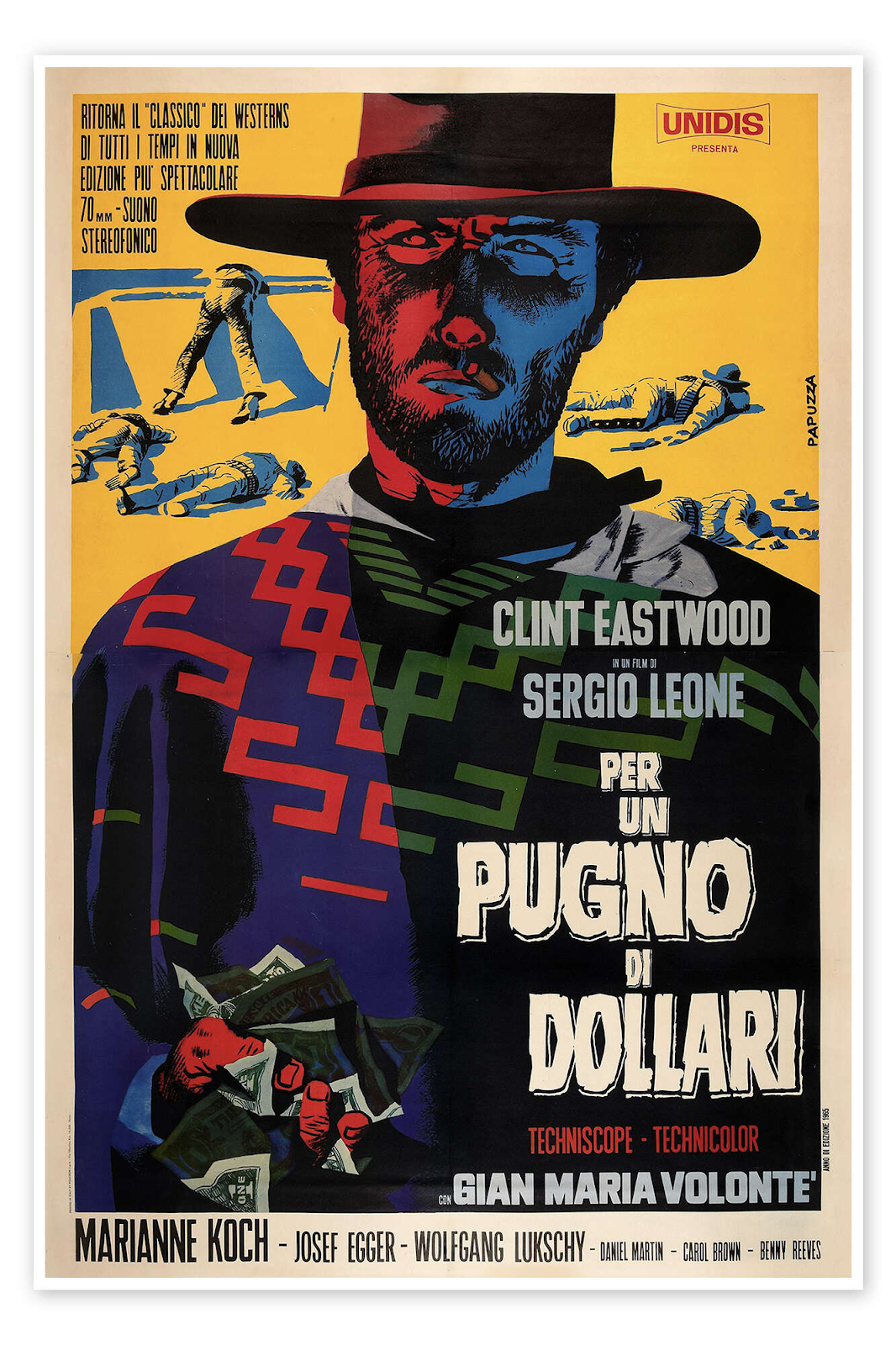
Fistful of Dollars


Marisol: Why do you do this for us?

Stranger: Why? Because I knew someone like you once and there was no one there to help.

This, this is where IT started.

What is the IT of that sentence?

Well, try this on for size.

The beginnings of Clint Eastwood as icon and not mere, “Didn’t he used to be on Rawhide?

It’s hard to imagine now, but there was a time when nobody really knew the name.

Clint was the tenth choice. Tenth!

First in the roster was Henry Fonda, then Charles Bronson, then Henry Silva, Rory Calhoun, Tony Russel, Steve Reeves, Ty Hardin and then James Coburn. These far better known [at the time] American actors all said, “No, thanks.”

Leone turned next to Richard Harrison, who also took a pass but Harrison, who was also not impressed with the script, suggested little known Clint Eastwood who could at least “Look convincingly cowboy.”

Leone, pressed for time, took a chance.

Watch that opening scene, hell, watch the entire film, does this look like a tenth choice performance?

Laconic swaggering cool never had it so good.

Bonus: Watch Clint’s gun-handling, from drawing, good wrist, and holster return. He’s doin’ it all. No less an authority than Nicole “Fastdraw” Franks gives Mr. Eastwood high marks for pistolry depiction.

Eastwood bit at the script, recognizing it as a take on the chambara film, Yojimbo, with a bit of Dashiell Hammett’s Red Harvest thrown in.

He picked up his own costume in a Hollywood thrift store and flew to Europe for this low-budget production by a no-name director, with this non-marquee star.

This film is also the beginning of Sergio Leone as a visual stylist that would go on to shape how action is framed.

Consider this, Leone had only directed a single film before this one, the not well received peplum The Colossus of Rhodes. There is nothing in that film, nothing, that says “Greatness is to come.”

He directed a mere handful after this film but each of these from unusual framing, to tracking action with a fluid camera in the days before Figg Rigs, drones, and light handhelds, in the days when such camera gymnastics were H-A-R-D—he did it anyway.

The static drawn out calm before the storm action pieces that have been cribbed by anyone and everyone including Mr. Tarantino who sings the praises of this film and its two follow-ups as The Only Perfect Film Trilogy in cinematic history.

The visual cribbing goes way beyond the screen. There is not a comic book, film poster, or graphic novel that does not owe a tremendous debt to Mr. Leone’s framing.

This film is really where the soundtrack and film score as part of the film moves to the fore.

Sure, we have memorable film music prior to this—Bernard Herrman’s work in Hitchcock’s Psycho being a memorable high point.

But it was composer Ennio Morricone and Sergio Leone who began something that had not been done before, they made the score a character in the film.

The score introduces characters. The score dictates the pace of the scene. The score matches film editing in syncopation—such as it had not been done before.

This film began anti-hero cool. This film launched a genre.

This film inspired thousands of films, books, TV shows, comic books, graphic novels, film scores, fashion trends etc. whether they were overtly Western or not.

The film viewed in isolation with no context holds up damn well.

But…if one goes in with an informed eye, an eye that really looks at everything that is on the screen [I mean everything] an ear that listens to all.

Then, and only then do we see not something of mere historic significance in the arts. We see something that is still crafted far better than much of what we see today that has far better budgets, far better gear, and far better tech.

What the present imitators don’t have are the maverick “Let’s go for broke and make our own thing” brio of the trio of Leone, Eastwood, and Morricone.

And to think this is merely the first film of an ever ascending trilogy.

Remarkable.

Tuesday, September 17, 2024

November Joe: Detective of the Woods by Hesketh Prichard


“What are you looking for?” said he.

“The tracks of the murderer.”

“You won't find them. He didn't make none.”

I pointed out the spot where the ground was torn.

“The lumberman that found him --spiked boots,” said November.

“How do you know he was not the murderer?”

“He didn't get here till Lyon had been dead for hours. Compare his tracks with Lyon’s… much fresher. No, Mr. Sport, that cock won’t fight.”

Let’s say you are a Sherlock Holmes fan and wished it was less urban, less Victorian saturated. Instead, you desired that same deductive prowess taken to the woods where good scoutcraft provided the crux for the powers of observation.

Well, if that’s the case, you’re in luck. This 1913 volume of linked short stories follows half-breed Canadian guide, Joe November though a series of crimes where good scoutcraft is at the fore.

The author knows of what he speaks having been a big game hunter and avid woodsman himself. He authored two non-fiction books on scoutcraft Through Trackless Labrador and Hunting-Camps in Wood and Wilderness. He brings that real life knowledge to bear on these stories.

The scoutcraft is sound but are the stories?

If one’s tolerance is high for the Rube Goldberg plotting of Doyle and like puzzle authors who self-admit that all lives or dies on the basis of how well the skein of tangled yarn holds, then you may find enjoyment here.

The stories are serviceable, but that is coming from a reader who finds convoluted dénouements a bit tiring after more than one.

Not a bad read but consider the caveats offered.

Tuesday, September 10, 2024

“Sugar” by Tom McGuane


When the cow tried to get back to the herd, I knew I would ride cutting horses for the rest of my life. With liquid quickness, the mare countered every move that the cow made. Riding her on a slack rein gave me a sense of controlled freefall. Centered between the ears of my horse as if in the sites of a rifle, the cow faked and dodged. Much of the time I didn't know where I was or where the cow was, and I was certainly no help to the horse. By the time I picked up the reins to stop, I was addicted to the thrilling shared movement of cutting, sometimes close to violence, which was well beyond what the human body could ever discover on its own.

This short non-fiction piece by the fine writer, Tom McGuane, can be found in his collection Some Horses.

It tells of the love affair with cutting horses that he and his wife both engaged in.

It nails the feelings of a novice rider versus the experienced rider. It takes us to competition and gets those details right, too; the missed turn-offs, the annoyances of pulling a trailer in traffic, the jittery nerves of competitive exposure, even the low-level “Me vs. You” between man and wife competing in the same event.

This man loved horses, but he is no Dan “Buck” Brannaman, and that makes the story all the more accessible for we lower-level riders. We can feel what he feels where as what “Horse Whisperers” do is an ineffable work of art, almost unrelatable beyond the beauty of witnessing the relationship.

A brief work but it does more to get “Man & Horse” dynamics perfect than many a longer tale in a genre that always features horses but seldom gets them right beyond the color.

Superlative!

Tuesday, September 3, 2024

The Threepersons Hunt by Brian Garfield


Fifty yards north of the station stood the roadhouse, the Broken Arrow, set back behind its dusty parking lot. It was a big rectangle sided with brown boards; there were no windows at all. The name of the place was painted in a faded crescent across the movie-set false front and an illuminated Coors Beer sign overhung the front door. The place had a forbidding aspect, like a slaughterhouse: the grim solid walls without windows gave the impression someone was ashamed of what went on inside.

This neo-Western penned in the 1970s by the talented Mr. Garfield is set in the southwest of the 70s.

We follow a Navajo law officer by the name of Sam Watchman as he is assigned to trail an escaped Apache Convict named Threepersons.

The landscape, the heat, the inter-tribal animosity, the outside press of Anglo ostracism are all portrayed beautifully.

We ride with Watchman on his contemporary manhunt for the first half of the novel and then…and then we begin to insert politics, a convoluted conspiracy involving water-rights, infidelity, past crimes remote to us and…well, the trouble is, the manhunt and Watchman on his on are compelling as hell. These additional complications, less so.

This is a well-written briskly paced novel.

What’s good is very good.

What did not hold this reader may hold others.

Tuesday, August 27, 2024

The Weight of a Dead Man by Weston Ochse & Yvonne Navarro


“You staring at me like you want to have my child,” the gunslinger said, his words like sawdust.

This tale has an intriguing premise, it is a mash-up of Old West adventure with Nate Dupes, a grandson of Edgar Allan Poe’s ratiocinating detective C. Auguste Dupin, working as a Pinkerton agent.

I’m all for experimentation with a bit of Jules Verne overlay of “streampunkish” elements but…this traipses a bit too far into incredulity for this reader’s tastes.

Wildy complicated plotting, convoluted secret societies with baroque motives, masters of disguise that stretch credulity to the breaking point.

Who travels with just the right amount of gear in their carpet bag to transform from a debonair French cosmopolitan to an authentic Chinese “coolie” in the blink of an eye?

Perhaps as a television episode or a graphic novel where such events pass quickly like confection this sates, but in prose where the reader is free to ponder loose elements at leisure…

Not unskillfully written, but this reader lacks the suspension of disbelief required for this journey.

Wednesday, August 21, 2024

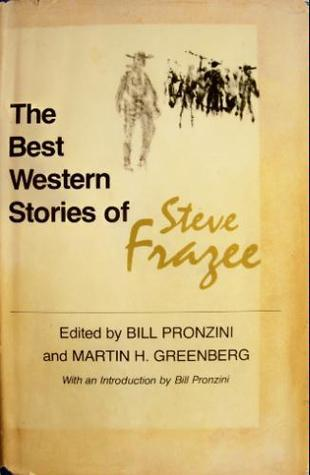
The Crew of the Foraker by Steve Frazee


They were taking Jack Muirhead to the brig on Samar. The crew of the Foraker, an old destroyer escort now, watched with a quietness that was not healthy. Sullenly we watched, crowding the quarter deck as close as we dared, standing on the torpedo deck, sitting aft on the depth charge racks. Signalman and quartermasters stalled around the flag bag, staring down

In our prior offering we looked at a WWI story by a noted Western author, here we follow another Western author [a good one at that] into the Second World War.

This 1953 Naval story is not one of combat, rather it is a tale of a hated commanding officer and the long brooding of revenge.

It is a mature theme, and Frazee seems the man to pull it off but…alas, it feels a bit too pat, a bit rushed, a bit underdeveloped.

Strangely this tale feels more dated than his Westerns although it is of a time far more recent than our Frontier Western past.

Frazee is a stalwart author, and I will return to him again, but likely only in his main genre.

The Devil’s Triangle & Fraudulent Research, Part 3

  [Here she be, Part 3! IF YOU HAVE NOT READ PARTS 1 & 2, well, it’d be silly to consume the blow that follows. Parts 1 & 2 set th...